
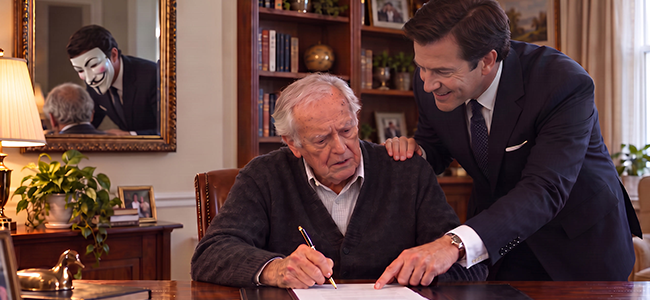
“Beware the wolf in sheep’s clothing.” (From Aesop’s Fables)
Your relative or friend dies, having at the last minute made a new will leaving everything to a new sole heir. You’re suspicious: the deceased was vulnerable, perhaps dying or suffering from dementia, and you’re convinced that they were taken advantage of by a manipulative fraudster. What can you do about it?
The bad news is that it’s never easy to have a will set aside. Our courts have repeatedly said that they will not do so lightly, and the onus will be on you to prove invalidity. But, as a recent High Court decision illustrates, it can be done.
A sad tale of two wills
This unhappy saga revolves around the two conflicting wills of a Durban man (a “bubbly, talkative social butterfly”) who died on 8 February 2022, just a day short of his 91st birthday and living in deteriorating mental and physical health in a care home.
In his earlier will, dated 29 September 2020, he had left everything to five charities. But then on 1 February 2022, just seven days before his death, he supposedly signed a second will in which he revoked all previous wills and named as his sole heir a man who claimed to have become a “son” to him.
The charities asked the High Court to declare the second will void, and the new heir fought back with a story that he had become like a son to the deceased after supposedly saving him and his wife from a robbery in 2017. It was, he said, no surprise that the deceased had decided to leave everything to him.
The deathbed will set aside
The Court was faced with conflicting evidence from a long list of witnesses for both sides. Its final conclusion? The charities had successfully produced clear evidence that the second will was invalid on the grounds of undue influence and of fraud relating to the signature on it.
The Court identified a litany of inconsistencies, contradictions and improbabilities in the evidence supporting the new heir’s case, concluding that the entire thread of his evidence bore “the hallmarks of a carefully thought-out plan to take advantage of the vulnerable position of a frail old man who befriended someone at a local department store”.
Specifically, on the day the deceased was supposed to have voluntarily signed the second will, he was clearly at death’s door, severely distressed and frail, breathless, struggling to speak, confused and unable to feed himself. His mental capacity to sign a will was in great doubt, and a nurse had witnessed the new heir kneeling next to the deceased and trying to get him to sign papers, which the deceased refused to do, shaking his head and saying “no”. To top it all, a handwriting expert suspected elements of forgery in the second will’s signature.
No surprise then that the Court declared the deceased’s deathbed will null and void and of no force and effect, leaving the original 2020 will as his last valid will and testament.
What you must prove to have a will nullified
When you challenge the validity of a will the onus will be on you to prove your case, and courts will not lightly set aside a will. But it can be done, and the Court provided some useful pointers on what you’ll have to prove:
- Competence to make a will must be assessed at the time of signing the will. The test is whether the testator’s “mind and memory were sufficiently sound to enable him to know and to understand the business in which he was engaged at the time he executed his will”.
- Undue influence requires proof of “conduct which is akin to coercion or fraud … to make a bequest that [the deceased] would not otherwise have made”.
- Fraud needs to be clearly proved. As the Court put it “the threshold to meet the requisite proof to establish fraud is high”.
- Forgery requires you to prove that the signature on the will isn’t authentic. In this case, there were conflicting conclusions from two different handwriting experts, and although the Court preferred the opinion of the expert who said his examination of the signature had revealed fraud, it weighed both conclusions against the evidence as a whole to assess where the balance of probabilities lay.
- The probabilities supporting the charities’ case played a major role in the declaration of invalidity, with the Court expressing doubt that the deceased would have suddenly decided to disinherit the charities, especially as his 2020 bequest to them traced its roots back to a 2008 will made jointly with his wife. Clearly the charities had been close to the couple’s hearts for many years. What’s more, the charities’ witnesses were not heirs under the earlier will and they had nothing to gain beyond honouring the last wishes of a dying man they were clearly very fond of.
For advice on drafting a will or disputing its validity, contact our wills and estates team.
Disclaimer: The information provided herein should not be used or relied on as professional advice. No liability can be accepted for any errors or omissions nor for any loss or damage arising from reliance upon any information herein. Always contact us for specific and detailed advice.
© LawDotNews